

Why Is My Smoke Alarm Beeping? Every Chirp, Decoded
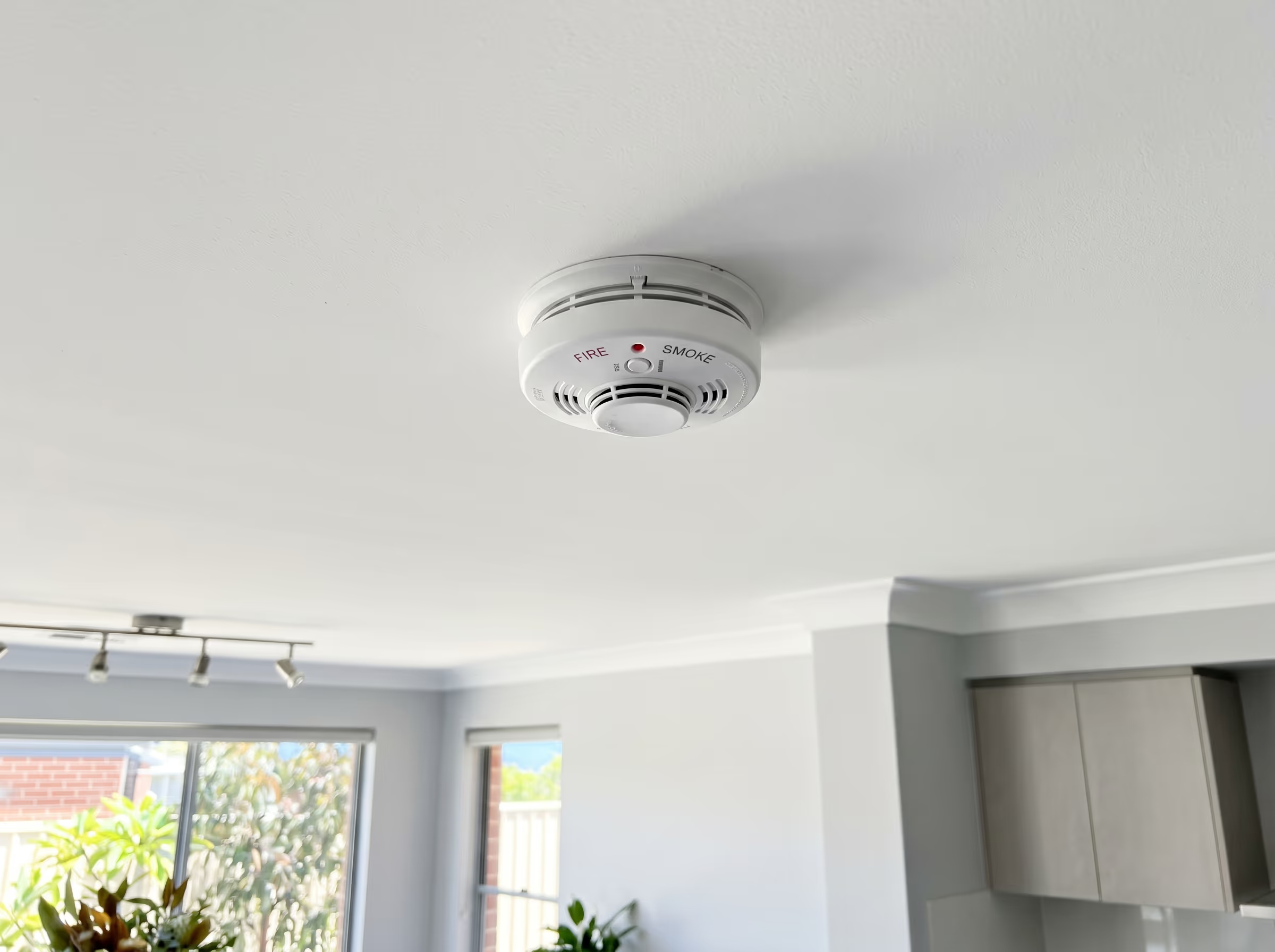
It’s 2:47am and somewhere in the house, a smoke alarm chirps. Once. You lie there waiting. Ninety seconds later: chirp. By the third one you’re standing on a dining chair in the dark, and by the fourth you’re seriously considering pulling the thing off the ceiling and burying it in the towel cupboard.
Don’t do that last bit, because a smoke alarm beeping at random is fixable, usually tonight, and usually without a ladder trip to Bunnings. Here’s what your smoke alarm is actually trying to tell you, beep by beep, from a licensed Perth electrical contractor who installs and replaces these things every week.
Key Takeaways
- A single chirp every 30–90 seconds is almost always a dying backup battery, even on mains-powered alarms, which still have a battery inside for blackouts.
- A chirp that survives a fresh battery usually means the alarm has reached end of life. Check the manufacture date printed on the alarm, 10 years is the legal and practical limit.
- Random false alarms (full sirens, no smoke) point to dust, insects, steam or an ageing sensor, vacuum the vents before assuming the worst.
- On interconnected systems, one alarm’s problem can sound through all of them, you have to find the one with the blinking light, not the one above your head.
- In WA, mains-powered alarms can only be installed, connected or disconnected by a licensed electrical contractor, swapping the backup battery is fine to DIY, replacing the alarm itself is not.
First: decode the beep
Different brands vary, so the sticker or manual on your specific model wins, but across the alarms we see in Perth homes, the patterns are remarkably consistent:
| What you’re hearing | What it usually means | What to do |
|---|---|---|
| One chirp every 30–90 seconds | Low backup battery | Replace the battery (9V or AA depending on model) |
| Chirp continues after a new battery | Alarm at end of life, or residual fault | Check the manufacture date, over 10 years means replace |
| One chirp every few minutes, irregular | Dust or insects in the sensing chamber, or humidity | Vacuum the vents, note where it’s mounted |
| Three beeps, pause, three beeps | Smoke detected or sensor fault (brand-dependent) | If there’s no smoke: clean it, then test |
| Full continuous siren | Smoke, steam or a triggered interconnect | Check every room, on interconnected systems the fire could be anywhere |
| Intermittent beeps only at night | Cold-weakened battery (see FAQ) | Replace the battery, it’s on its way out |
The 10-minute fix list
Work through these in order, most chirps die at step one or two.
1. Replace the backup battery
Yes, even if your alarms are hardwired. Every compliant mains-powered alarm in WA has a backup battery so it keeps working through a blackout, and that battery dies like any other, typically every 1–2 years for a 9V. Twist the alarm gently off its base (mains alarms stay connected by their wiring loom, don’t unplug it), swap the battery, twist it back on, and press the test button until it sounds.
If your alarm has a sealed lithium battery that isn’t replaceable, a low-battery chirp means the whole unit is at end of life, those batteries are designed to last the alarm’s full 10-year service life.
2. Vacuum the sensing chamber
Dust, cobwebs and tiny insects inside the sensing chamber are behind most false alarms and plenty of phantom chirps. Run a vacuum cleaner brush attachment around the vents on the side of the alarm for 10–15 seconds. In Perth’s summer-dust and winter-condensation cycle, doing this every six months roughly halves nuisance behaviour in our experience.
3. Check the manufacture date
Twist the alarm off its base and look for a date printed on the back or rim. Smoke alarms have a hard 10-year life, the sensing chamber degrades whether or not the test button still works. An alarm made in 2016 or earlier is done, and in WA it also fails the compliance check the day you sell or lease the property. The full rules are in our WA smoke alarm laws guide.
If there’s no date printed at all, the alarm predates the requirement, which itself tells you it’s well past ten years old. Replace it.
4. Think about what’s near it
An alarm within a few metres of a bathroom door, rangehood-less kitchen or laundry will false-alarm on steam and cooking aerosols forever, no amount of cleaning fixes a placement problem. Relocating a mains-powered alarm is licensed electrical work, but it’s quick, and it’s the permanent fix.
Interconnected alarms: finding the one that’s actually chirping
Newer WA homes have interconnected alarms, one senses smoke, all of them sound. The catch: on many systems a fault or low battery in one alarm can trigger chirps or sirens through the set, so the alarm above your bed may be entirely innocent.
Look for the alarm whose indicator light is flashing differently from the others (commonly red instead of green, or a distinct blink pattern). That’s your culprit. If they all look identical, pressing the test/hush button on each alarm in turn usually reveals the odd one out.
The beeps that mean “call an electrician”
- Chirping continues after a fresh battery and a clean, the alarm is telling you it’s done. Replacement of a mains-powered alarm is licensed work in WA.
- The alarm is more than 10 years old or undated, replace, don’t resuscitate.
- Repeated false alarms with no obvious steam or dust source, degraded sensor.
- Any alarm that’s been taken down and left disconnected. A bare ceiling rose where an alarm should be is the worst possible state, it protects nobody and fails every compliance test. If a chirping alarm drove someone in the house to remove it, get a working one back up promptly.
One thing we see constantly: homes where one bedroom alarm was removed years ago after a chirping fit, and the gap only surfaces during a pre-settlement inspection with days to spare. If you’re anywhere near selling or leasing, sort the alarms before the settlement agent does it for you, our smoke alarm laws guide covers exactly what compliance requires, and our smoke alarm installation service handles the rest.
FAQ
Why does my smoke alarm only chirp at night?
Genuinely one of our favourite bits of electrical trivia: battery voltage drops as temperature drops. A battery that’s marginal during the day dips below the alarm’s low-battery threshold in the small hours, Perth winter nights are exactly when it happens. The battery isn’t teasing you; it’s dying, and the cold overnight air pushes it over the line first.
I put in a new battery and it’s still chirping. Why?
Three usual suspects: the new battery is from the same tired multipack as the old one; the alarm needs a reset (hold the test button for 15–20 seconds with the battery out on many models, which drains residual charge); or the alarm is at end of life and the battery was never the problem. Check that manufacture date.
Can I just disconnect the alarm to stop the noise?
For a battery-only alarm, you can, but you’re removing the one device designed to wake you in a fire. For a mains-powered alarm, disconnection is licensed electrical work in WA, and an alarm someone unplugged is a compliance failure at sale or lease time, and far worse than that if there’s ever a fire. Fix the cause instead; it’s nearly always a $10 battery or a replacement alarm.
Whose job is a chirping alarm in a rental, mine or the landlord’s?
Broadly: the landlord must provide compliant, working, in-date alarms at the start of every tenancy, and replacing a flat backup battery during a tenancy is typically the tenant’s job (like a light globe). If the alarm itself is faulty or expired, that’s back on the owner, report it in writing. Details in the WA smoke alarm laws guide.
How often should I test my smoke alarms?
Press-and-hold the test button monthly, vacuum the vents every six months, and put a reminder in your phone for the 10-year replacement date while you’re up there. The test button checks the sounder and circuit, it does not test the smoke sensor, which is why the 10-year rule exists at all.
The bottom line
A chirping smoke alarm is telling you one of three things: my battery is dying (fix tonight, $10), I’m dirty or badly placed (vacuum, or relocate it), or I’m past my 10-year life (replace me, and in WA, replacement of a hardwired alarm is an electrician’s job). The one wrong answer is silencing it and walking away.
Chirp sorted by a licensed electrician
We replace, relocate, interconnect and certify mains-powered smoke alarms across Perth, usually same-week, and because we’re dual-licensed we can knock over RCD or switchboard work in the same visit. If an alarm’s chirping and you’ve done the battery, it’s probably telling you its time is up.
Book a smoke alarm visit or call 0434 951 341, and until it’s sorted, leave it on the ceiling.
Need a hand with this?
Otter Air is your local, licensed Perth team for air conditioning and electrical. Free quotes, upfront fixed pricing, and honest advice.