

WA Smoke Alarm Laws: Rules for Homes & Rentals
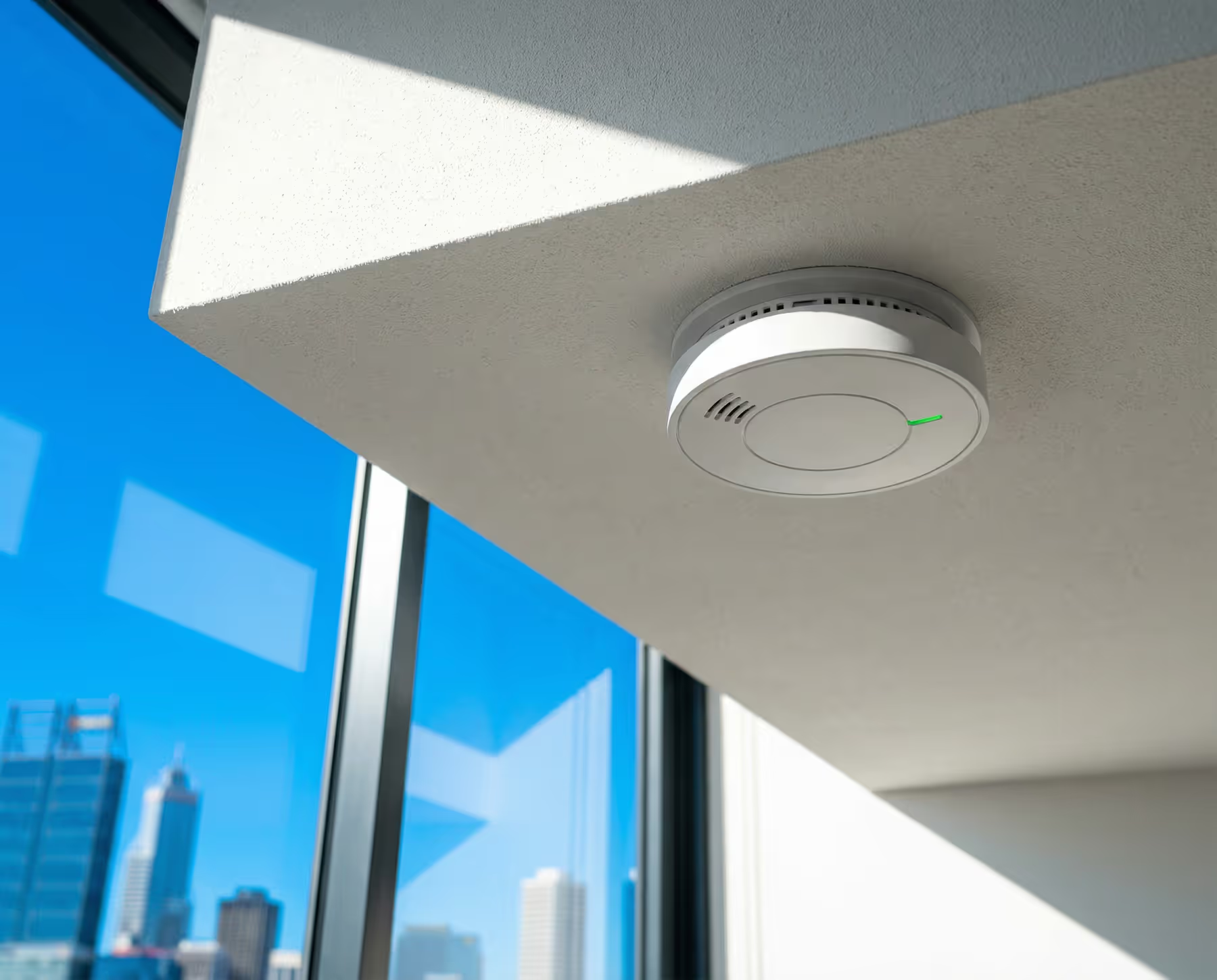
A seller in Gosnells rang us eight days before settlement. Her settlement agent had just flagged that the house needed compliant smoke alarms before transfer, her existing alarms were battery jobs from the mid-2000s, and nobody had mentioned any of this when she listed. We had hardwired alarms in two days later, but the panic was avoidable: WA’s smoke alarm laws are strict, specific, and they bite at exactly the moments you’re busiest, selling, leasing, or building.
Here’s the plain-English guide to WA smoke alarm requirements in 2026: when hardwired alarms are mandatory, the 10-year rule, where alarms have to go, and what landlords and sellers actually have to do. It’s written by a licensed Perth electrical contractor, because in WA, most of this work legally has to be done by one.
This article is general information, not legal advice. The authoritative source is the WA Government’s smoke alarm laws page (Building and Energy), and the rules sit in the Building Act 2011 and Building Regulations 2012.
Key Takeaways
- Mains-powered (hardwired) smoke alarms are mandatory in WA when a home is sold, rented, hired out, or newly built. Battery-only alarms don’t satisfy the law in these situations, with one narrow exception.
- The 10-year rule: every alarm must be less than 10 years old from its manufacture date, printed on the alarm itself. Old alarms fail compliance even if they still beep.
- Sealed 10-year lithium battery alarms are only permitted where mains wiring genuinely can’t be run, think concrete ceilings or flat roofs with no cavity, not “it was cheaper”.
- Only a licensed electrical contractor can install, connect or disconnect a mains-powered smoke alarm. This is not a DIY or handyman job.
- Landlords carry the compliance burden: compliant, working, in-date alarms before every new tenancy, alongside WA’s two-RCD requirement.
The rules at a glance
| Situation | What WA law requires |
|---|---|
| Selling a home | Compliant mains-powered alarms, less than 10 years old, fitted before transfer of ownership |
| Renting / leasing | Compliant alarms in place and working before the tenancy starts |
| Hiring out (short stays) | Same standard as rentals |
| New build | Hardwired, interconnected alarms as part of building approval |
| Significant renovation | Alarms brought up to standard as part of the building permit |
| Just living in your own home | No retrofit trigger, but the 10-year rule and working alarms are still strongly recommended, and required the day you sell or lease |
When hardwired smoke alarms are required
In WA, mains-powered smoke alarms complying with Australian Standard AS 3786 are required when a residential property is:
- Sold, in place before the transfer of ownership, not “after we move out”
- Rented, before a new tenancy or lease begins
- Hired out, including short-term accommodation
- Newly built, as part of building approval
- Significantly renovated, when the renovation involves a building permit
Hardwired alarms run off the home’s 240V supply with a battery backup, so they keep working through a blackout, and nobody can quietly unclip the battery because the alarm chirped at 2am. That last point is most of the reason the law exists: battery-only alarms have a habit of being dead exactly when they’re needed.
The 10-year rule
Smoke alarms don’t last forever. The sensing chamber degrades, dust accumulates, and after a decade the alarm can’t be trusted, so WA law requires every alarm to be less than 10 years old from its date of manufacture at the point of sale or new tenancy.
The manufacture date is printed on the alarm (usually on the back or rim, so you may need to twist it off its base to check). If your alarms are undated or older than a decade, they need replacing, even if they beep proudly when you press the test button. The test button checks the circuit and the sounder, not the smoke sensor.
When battery alarms are still legal
There’s one narrow exception to the hardwired rule. A 10-year sealed lithium battery photoelectric alarm is permitted only where there’s genuinely no way to run mains wiring, for example:
- A concrete ceiling (common in apartments and some 60s-70s builds)
- A flat or skillion roof with no ceiling cavity to run cable through
“The sparky’s quote was more than the Bunnings alarm” is not one of the exceptions. If wiring can physically be run, the alarm must be mains-powered. If you’re not sure which category your home falls into, that’s a two-minute answer at a site visit.
Where smoke alarms have to go
Placement follows the Building Code of Australia, and the short version for homes is:
- On every storey of the home, even a storey with no bedrooms
- Between each sleeping area and the rest of the house, in practice, the hallway outside the bedrooms
- In any hallway that serves bedrooms; where there’s no hallway, between the bedroom doors and the living areas
Placement details matter more than people expect: alarms need clearance from walls, corners, light fittings and air conditioning outlets so smoke actually reaches them, and there are spots (kitchens, bathrooms, near ceiling fans) where a poorly placed alarm either misses smoke or false-alarms until someone disables it. Getting this right is part of the install, and it’s why the DFES guidance and the Building Code both get a say in where we put them.
Interconnected alarms: required in new builds, smart everywhere
Where a new home needs more than one alarm, the alarms must be interconnected, when one detects smoke, all of them sound. For existing homes being sold or leased, interconnection isn’t retrospectively mandatory in WA, but we recommend it every time we’re already doing the wiring.
The reason is simple: a fire that starts in the kitchen or garage at 2am needs to wake people behind closed bedroom doors at the other end of the house. Modern interconnected smoke alarms do that either by cable or wirelessly (RF interconnection), so retrofitting doesn’t necessarily mean re-wiring the whole house.
What landlords need to know
If you own a rental in WA, smoke alarm compliance sits with you, not the tenant, and it’s checked at every changeover:
- Before every new tenancy: alarms must be mains-powered (or compliant sealed-battery where permitted), less than 10 years old, correctly located, and working
- Maintenance is yours: testing and replacing alarms is the lessor’s responsibility; tenants shouldn’t be swapping or disabling alarms
- It pairs with the RCD rule: WA also requires at least two RCDs protecting the power and lighting circuits of a rental, so if your board is older, one visit can sort both, see our switchboard upgrade guide for what that costs
- Keep records: dates of installation, manufacture dates and test results. If anything ever goes wrong, the paper trail is your protection
Fines apply for non-compliance, and beyond the fine, a non-compliant alarm in a rental that’s had a fire is an insurance and liability nightmare. Compliance is cheap by comparison.
Selling a house? Your smoke alarm checklist
Before settlement day:
- Count and locate your alarms against the placement rules above, every storey, hallways serving bedrooms
- Check the manufacture dates, anything 10+ years old (or undated) gets replaced
- Confirm they’re mains-powered, look for the absence of a replaceable battery compartment, or ask us to check; if any are battery-only, they need hardwiring unless the narrow exception applies
- Test everything, and fix or replace anything that fails
- Book the electrician early, settlement timelines and sparky availability don’t always cooperate, as our Gosnells seller discovered
Your settlement agent will usually ask you to confirm compliance. Getting a licensed electrician to install and certify the alarms means that confirmation is backed by something.
Photoelectric vs ionisation: which type to buy
Two sensing technologies exist, and it matters. Ionisation alarms react fastest to hot, flaming fires; photoelectric alarms react much faster to slow, smouldering fires, the overnight couch or wiring fire that produces thick smoke long before flame, which is the type that kills people in their sleep. DFES recommends photoelectric alarms for homes, the sealed-battery exception in WA law specifically names photoelectric, and every alarm we install is photoelectric for exactly that reason.
If you’re replacing alarms anyway, this is the moment to standardise: matching photoelectric units throughout, interconnected, with the manufacture dates recorded. It costs no more to do it properly.
Testing and maintenance (for every home)
Between the legal trigger points, alarms only help if they work:
- Monthly: press and hold the test button until the alarm sounds
- Yearly: vacuum around the alarm vents to clear dust, the most common cause of false alarms, and replace backup batteries in older mains alarms
- After any false-alarm spree: don’t disconnect it, find the cause. A chirping or false-alarming unit is usually dusty, dying, or badly located, all fixable
Common questions
Are battery smoke alarms legal in WA?
Only in two situations: in a home you’re living in and not selling or leasing (legal, but not recommended), or as a 10-year sealed lithium photoelectric alarm where mains wiring genuinely cannot be run, such as concrete ceilings or no roof cavity. At sale, lease or new build, everything else must be mains-powered.
Can I install a hardwired smoke alarm myself?
No. Connecting or disconnecting a mains-powered smoke alarm is electrical work, and in WA it must be done by a licensed electrical contractor. DIY mains work is illegal and voids insurance. Replacing the backup battery or pressing the test button is fine to do yourself.
How many smoke alarms does my house need?
At minimum: one on every storey, positioned between the sleeping areas and the rest of the home, plus any hallway serving bedrooms. Larger or unusual layouts often need more. We confirm exact placement against the Building Code as part of every install.
Do my smoke alarms need to be interconnected?
In a new build, yes, where more than one alarm is required. In an existing home being sold or leased, interconnection isn’t retrospectively required in WA, but it’s the single best upgrade you can make while an electrician is already there, one alarm sensing smoke wakes the whole house.
How much does smoke alarm installation cost in Perth?
It depends on how many alarms, whether wiring already exists at each point, and ceiling access. We quote a fixed price upfront, and smoke alarm work often pairs neatly with a switchboard upgrade or a broader electrical safety check in the same visit, one call-out instead of two.
Why does my smoke alarm keep chirping?
A regular chirp usually means a dying backup battery; a random false alarm usually means dust in the sensing chamber or an alarm past its 10-year life. We’ve decoded every beep pattern and fix in our smoke alarm beeping guide. Try a vacuum around the vents and a fresh backup battery first. If it keeps chirping, check the manufacture date, an alarm near or past 10 years old is telling you it’s done. Whatever you do, don’t take it down and leave the ceiling bare.
What happens if my alarms aren’t compliant when I sell?
Compliance is required before transfer of ownership, so non-compliant alarms surface as a settlement problem: delays, last-minute trade bookings, or price adjustments. Checking your alarm dates the week you list the property costs nothing and avoids all of it.
The bottom line
WA smoke alarm law comes down to four things: hardwired alarms at sale, lease, hire and new build; less than 10 years old; correctly placed on every storey and outside sleeping areas; and installed by a licensed electrical contractor. The sealed-battery exception is narrow, the 10-year rule catches more homes than any other requirement, and landlords carry the obligation at every tenancy change.
Get it sorted by a licensed electrician
We supply, install, test and certify compliant hardwired and interconnected smoke alarms for homeowners, sellers and landlords right across Perth, and because we’re dual-licensed, we can knock over RCDs or switchboard work in the same visit.
Book a smoke alarm service or call 0434 951 341 for a free quote, and get the settlement, the tenancy or just the peace of mind sorted properly.
Need a hand with this?
Otter Air is your local, licensed Perth team for air conditioning and electrical. Free quotes, upfront fixed pricing, and honest advice.