

Why Is My Aircon Leaking Water? Perth Guide
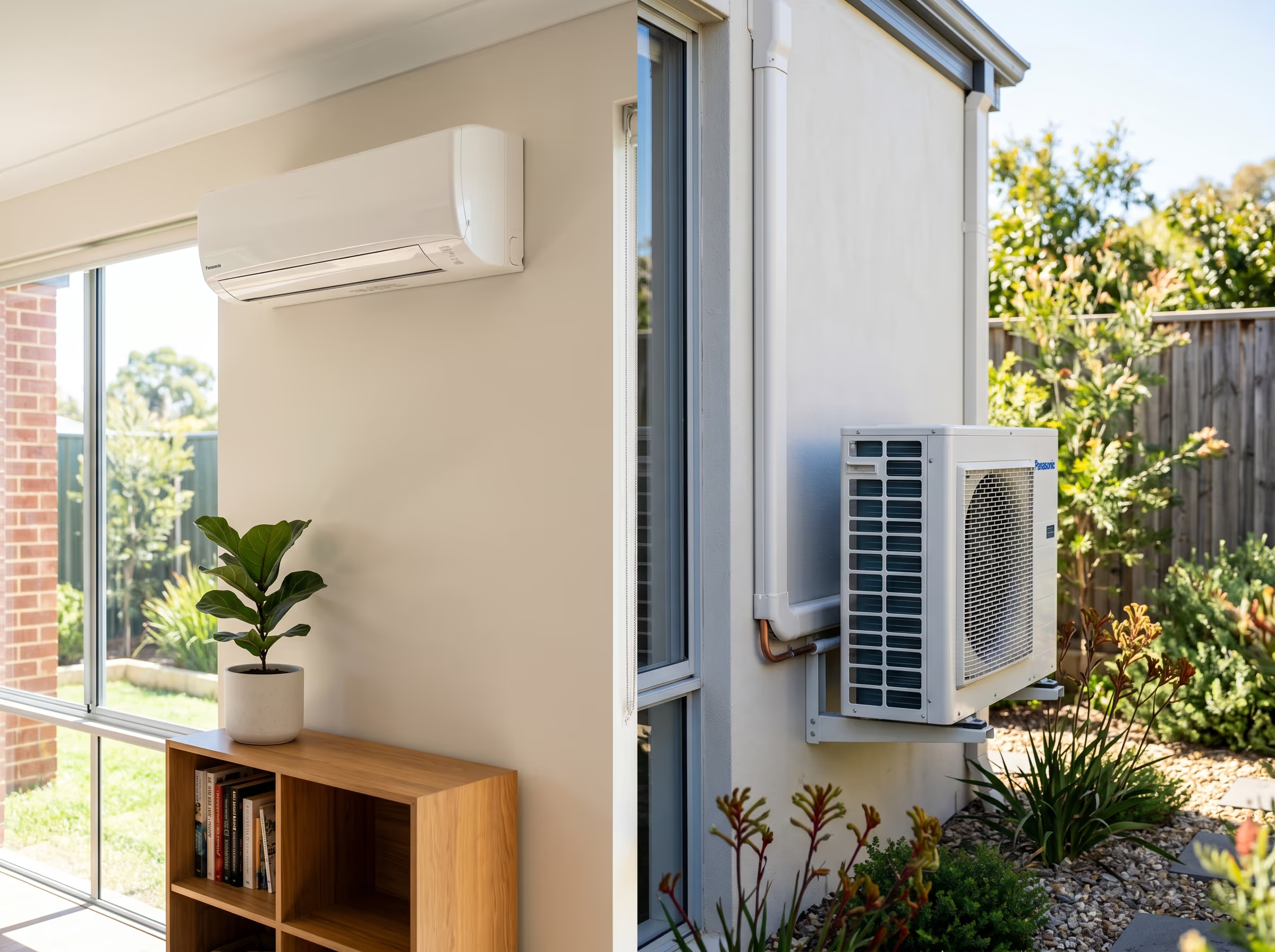
Last summer a customer in Forrestfield rang me on a 39°C afternoon with a brown stain spreading across her loungeroom ceiling, right under where the ducted unit sits in the roof space. She thought the roof was leaking. It wasn’t raining. It was her air conditioner, and by the time we got there the plasterboard was sagging.
If you’ve got an aircon leaking water, the first thing to know is it’s almost always fixable. The second is that the water itself is rarely the real problem. The damage it does to your ceiling, walls and the electrical behind them is. This guide runs through why a split or ducted air conditioner leaks water in Perth homes, how to tell which cause you’re dealing with, and what you can safely check before calling anyone.
Key Takeaways
- A blocked condensate drain is the number one cause of an aircon leaking water inside in Perth. Algae and dust clog the drain line, the water backs up, and it spills out the front of the indoor unit.
- Turn the unit off the moment you see water dripping inside. That stops the damage to your ceiling, walls and any wiring behind them while you sort the cause.
- A dirty filter is the most common cause you can fix yourself. A clogged filter starves the coil of airflow, the coil ices up, then melts and drips. Clean the filter first.
- Dripping outside is usually normal: from the condensate drain line in cooling, or the base of the outdoor unit in heating. Water leaking from the aircon inside the house is the problem.
- Ice on the indoor coil or pipes points to low refrigerant or airflow trouble. That’s a licensed job, not a DIY one.
- If water is anywhere near a power point, light fitting or the unit’s wiring, treat it as urgent and get a qualified eye on it.
Quick note before you read on. If your aircon is leaking water inside right now, turn it off at the isolator, put a bucket or towel under the drip, and book a repair. We’ll track down the cause and, more often than not, fix it on the spot.
Aircon leaking water inside vs outside: which is normal?
Not every drip is a fault. Knowing where the water is coming from tells you whether to relax or act.
Water outside the house is almost always normal, and where it comes from depends on the mode. In cooling, your aircon pulls moisture out of the room air and drains it away through the condensate drain line, so expect water dripping from that pipe outside. On a humid Perth day that can be a steady trickle, even a small puddle on the paving under the outdoor unit. In heating, it’s the outdoor unit’s turn: it runs a defrost cycle and water drips from the bottom of the outdoor unit itself. Both are the system doing its job, not a fault.
Water leaking from the aircon inside the house is the problem. Drips off the bottom of the indoor wall unit, an air conditioner dripping water inside the room, water running down the wall below it, or staining on the ceiling under a ducted vent all mean something has gone wrong with the drainage or the coil. That’s what the rest of this guide is about.
The most common cause in Perth: a blocked condensate drain
Nine times out of ten, when we get called to an aircon leaking water inside, it’s a blocked condensate drain line. It’s by far the most common cause we see across Perth, and there’s a local reason for it.
How to tell
The condensate drain is the pipe that carries the moisture your aircon pulls from the air out to the outside. Over time it collects dust, dirt and, in Perth’s warm climate, a slimy algae and mould build-up that thrives in the dark, damp inside of a drain line. Once it clogs, the water has nowhere to go. It backs up, overflows the drain pan, and spills into your room.
Signs it’s a blocked drain:
- Water dripping from the front or bottom of the indoor split unit, often more on hot, hard-working days.
- No water coming out of the outdoor drain pipe when the system’s running (it should be).
- A musty or mouldy smell from the unit, the algae giving itself away.
- Staining on the ceiling below a ducted system’s roof-space unit or near a vent.
DIY check vs call a pro
You can check this one yourself. Find the drain outlet outside (a small pipe poking out of the wall near the outdoor unit) and see whether water comes out when the aircon’s been running a while. If it’s bone dry while the unit’s dripping inside, the line’s blocked.
Clearing a partial blockage near the outlet is sometimes a DIY job. But a properly clogged line, especially a ducted drain running through the roof, needs the right gear to flush or vacuum it out without forcing water back into the unit. A condensate drain clear and flush is a standard part of our air conditioning servicing and repairs, and it’s exactly what a regular service prevents in the first place.
A dirty filter that’s iced the coil over
This is the cause you can most often fix yourself, and it’s the one worth checking before you call anyone.
How to tell
Your indoor unit has a filter that catches dust before air passes over the cold coil. When the filter clogs, airflow across the coil drops. With not enough warm room air moving over it, the coil gets too cold, frosts up, and turns into a block of ice. When the system cycles off, that ice melts all at once, more water than the drain pan can handle, and it overflows into your room.
Signs it’s a filter and icing problem:
- Ice or frost on the indoor coil or copper pipes.
- Weak airflow, barely a breeze from the vents.
- It cools fine for a while, then drips once it’s been running hard.
- You can’t remember the last time you cleaned the filter.
DIY check vs call a pro
Pop the front cover on your split, slide the filters out, and have a look. If they’re grey with dust, that’s very likely your culprit. Cleaning them is genuinely a DIY job, and we’ve written a step-by-step on how to clean your air conditioner filter.
Turn the unit off first and let any ice melt fully (give it a couple of hours) before running it again. Keeping filters clean is also the single cheapest thing you can do for efficiency. The Australian Government’s energy.gov.au heating and cooling guide lists it as basic maintenance. If it ices up again with clean filters, the cause is deeper, usually low refrigerant or a dirty coil, and that’s where a pro comes in.
Low refrigerant or a frozen coil
If the filter’s clean and the coil still freezes and drips, refrigerant is the usual suspect.
How to tell
Refrigerant is the gas that does the cooling. If your system is low, usually from a slow leak in the pipework, the coil pressure drops and it freezes even with good airflow. Same end result as a dirty filter: ice builds up, then melts and drips. The difference is the cause.
Signs it’s refrigerant:
- The unit runs and runs but the room never gets properly cool.
- Ice on the coil or pipes despite clean filters and good airflow.
- A hissing or bubbling noise from the indoor unit (not always there).
- The aircon is older or has needed topping up before.
DIY check vs call a pro
This one’s a pro job, full stop. Handling refrigerant in Australia requires an ARC (Australian Refrigeration Council) licence by law. You can read the basics on the ARCtick website. Just as importantly, “low refrigerant” almost always means there’s a leak. Topping it up without fixing the leak is throwing money away. You’ll be back in the same spot in months. A proper repair finds the leak, fixes it, then recharges to the manufacturer’s spec.
A dirty coil restricting airflow
Even with clean filters, the coil itself can get caked in fine dust over the years, and that does the same thing as a blocked filter.
How to tell
The evaporator coil is the cold finned part the air passes over. Fine dust slips past the filter over time and builds up on those fins, especially if the system’s never been serviced. That coating chokes airflow, which can freeze the coil and lead to dripping, or simply overwhelm the drain pan with extra condensate.
Signs it’s a dirty coil:
- Clean filters, but airflow’s still weak.
- The unit’s never been professionally serviced, or not in years.
- Visible grime on the fins behind the filter.
DIY check vs call a pro
You can eyeball the coil once the filter’s out, but cleaning it properly is a pro job. The fins are thin aluminium and bend easily, and a deep clean needs specific chemicals and a careful technique. A coil clean is part of a full service, the cheapest insurance against most of the causes on this list.
A dodgy install: unit not level or wrong drain slope
Sometimes the aircon leaking water has nothing to do with maintenance. It was set up wrong from day one.
How to tell
A split’s indoor unit and drain line rely on gravity. The unit needs to sit dead level (or tilted very slightly towards the drain), and the drain line has to run downhill all the way outside. If the unit was mounted on a lean, or the drain line sags or runs uphill anywhere, water pools instead of draining and eventually spills out. A new split system leaking water from one end of the indoor unit is a classic sign of this.
Signs it’s an install fault:
- It’s leaked since it was installed, or since a recent install.
- The indoor unit looks visibly tilted on the wall.
- The drip is consistently from one end of the unit.
- A newly installed system that’s never drained properly.
DIY check vs call a pro
You can sanity-check whether the unit looks level with a phone level app, but correcting it means re-mounting the unit or re-running the drain line, which is a licensed installer’s job. If a recently installed system is leaking, get the installer back or get a second opinion. A properly installed split system shouldn’t leak inside, and a good ducted system drain should clear water reliably for years.
A cracked or overflowing drain pan
The drain pan sits under the coil and catches the condensate before it heads down the drain line. When it fails, water goes straight onto your ceiling or floor.
How to tell
Drain pans crack, warp or rust over the years. A cracked pan leaks no matter how clear the drain line is. An intact pan can still overflow if the drain’s blocked or the unit’s making more condensate than it can clear, which loops back to the causes above.
Signs it’s the pan:
- Older system with a long history.
- Water appears even when the drain line checks out clear.
- Visible crack, rust or split in the pan (a pro will spot this).
DIY check vs call a pro
This is a pro diagnosis and fix. Getting at the pan usually means partly dismantling the unit to inspect or replace it. It’s not a common cause, but it’s worth a technician ruling out if the obvious culprits come up clean.
Just a very humid Perth day
Worth a mention because it catches people out. On a genuinely humid day, especially in our muggy late-summer stretch, your aircon pulls far more moisture from the air than usual. A system that normally copes can briefly make more condensate than the drain clears, and you might see a bit of dripping that sorts itself out.
If it’s a one-off on a sticky day and it stops, it’s probably nothing. If it keeps happening, treat it as one of the real causes above. The humidity just exposed a drain that was already half-blocked or a pan near its limit.
Why you shouldn’t leave it: the damage adds up fast
Here’s the part I want every homeowner to take seriously. The water itself is cheap to fix. What it ruins isn’t.
- Ceilings and walls: plasterboard soaks up water, sags, stains and eventually fails. That Forrestfield ceiling cost more to repair than the drain clear that caused it.
- Electrical: split and ducted units have live wiring, and water and electricity are a dangerous mix. Water tracking down a wall can reach power points and light fittings.
- Mould: a slow internal leak feeds mould inside walls and ceiling spaces, a health and cost problem long before you see it.
- The unit itself: water sitting where it shouldn’t corrodes components and shortens the system’s life.
If water is anywhere near a power point, light fitting, or the unit’s own electrics, switch it off at the isolator and treat it as urgent. As a dual-licensed aircon and electrical business, we look at both sides in one visit, the leak and anything the water’s touched.
Aircon leaking water? Do this right now
If your aircon is leaking water inside as you read this, here’s the order to do things in:
- Turn it off at the isolator. Stops more water and protects the electrics. This is the single most important step.
- Put a bucket or towel under the drip to catch what’s already coming.
- Check and clean the filter. Pull the filters, and if they’re filthy, clean them. This alone fixes a fair share of leaks.
- Let any ice melt fully before running the unit again, a couple of hours at least.
- Check the outdoor drain outlet. Is water coming out when the system runs? If it’s dry while the unit drips inside, the drain’s blocked.
- If it still leaks, or you find ice, smell mould, or see water near anything electrical, call a pro. Don’t keep running it and hoping.
Frequently Asked Questions
Why is my aircon leaking water inside the house?
The most common reason an aircon is leaking water inside is a blocked condensate drain line, usually clogged with algae and dust, so the water backs up and overflows. Other causes are a dirty filter icing the coil, low refrigerant, a dirty coil, or a unit that isn’t level.
Is it normal for my air conditioner to drip water outside?
Yes. Water leaking from aircon outdoor units, or from the small drain pipe on an outside wall, is normal. Your aircon pulls moisture from the air and drains it outside, so a trickle or small puddle under the outdoor unit on a humid Perth day is the system working as it should.
Can I run my air conditioner if it’s leaking water?
No, turn it off at the isolator. Running it spreads water damage across your ceiling, walls and the wiring behind them, and if the cause is a frozen coil you’ll just keep making more ice and water. Switch it off, catch the drip, and check the filter before doing anything else.
Why does my split system leak water only on hot days?
On hot days your system works harder and produces more condensate, so a drain that’s partly blocked or a pan that’s near its limit will overflow under the extra load. It also means a coil that’s icing up from a dirty filter or low refrigerant melts off more water. The hot day isn’t the cause, it just exposes one.
How much does it cost to fix an aircon leaking water in Perth?
It depends on the cause. A condensate drain clear or flush is typically the cheapest fix, often handled as part of a standard service. Refrigerant leaks, a damaged drain pan or correcting a bad install cost more because there’s more involved. We diagnose the cause and quote the actual fix before any work.
How do I stop my air conditioner leaking water in future?
Clean your filters regularly (every month or two in summer) and book a professional service once a year. A yearly service clears the condensate drain, cleans the coil, and catches a failing pan or low refrigerant before they turn into a leak and a stained ceiling.
Don’t let a small drip become a ceiling repair
A leaking aircon is one of those problems that’s cheap and quick to fix early, and expensive and messy to fix late. If you’ve worked through the simple checks and it’s still dripping, or you’ve spotted ice, smelled mould, or seen water near anything electrical, get it looked at properly.
We’ll find the actual cause, fix it, and check that the water hasn’t reached anything it shouldn’t have, the leak and the electrical side, in one visit. Free quotes, upfront fixed pricing, and an honest answer about whether it’s a quick service job or something more.
Book your Perth aircon leak repair → or call 0434 951 341.
Written by Matt Grossmith, owner of Otter Air & Electrical. Matt is ARC-licensed for refrigerant work and holds a WA electrical contractor’s licence (EC16559 / AU064616). 10+ years installing, servicing and repairing residential air conditioning across Perth.
Need a hand with this?
Otter Air is your local, licensed Perth team for air conditioning and electrical. Free quotes, upfront fixed pricing, and honest advice.