

Air Conditioning Regas: Does Your Home AC Ever Need One?
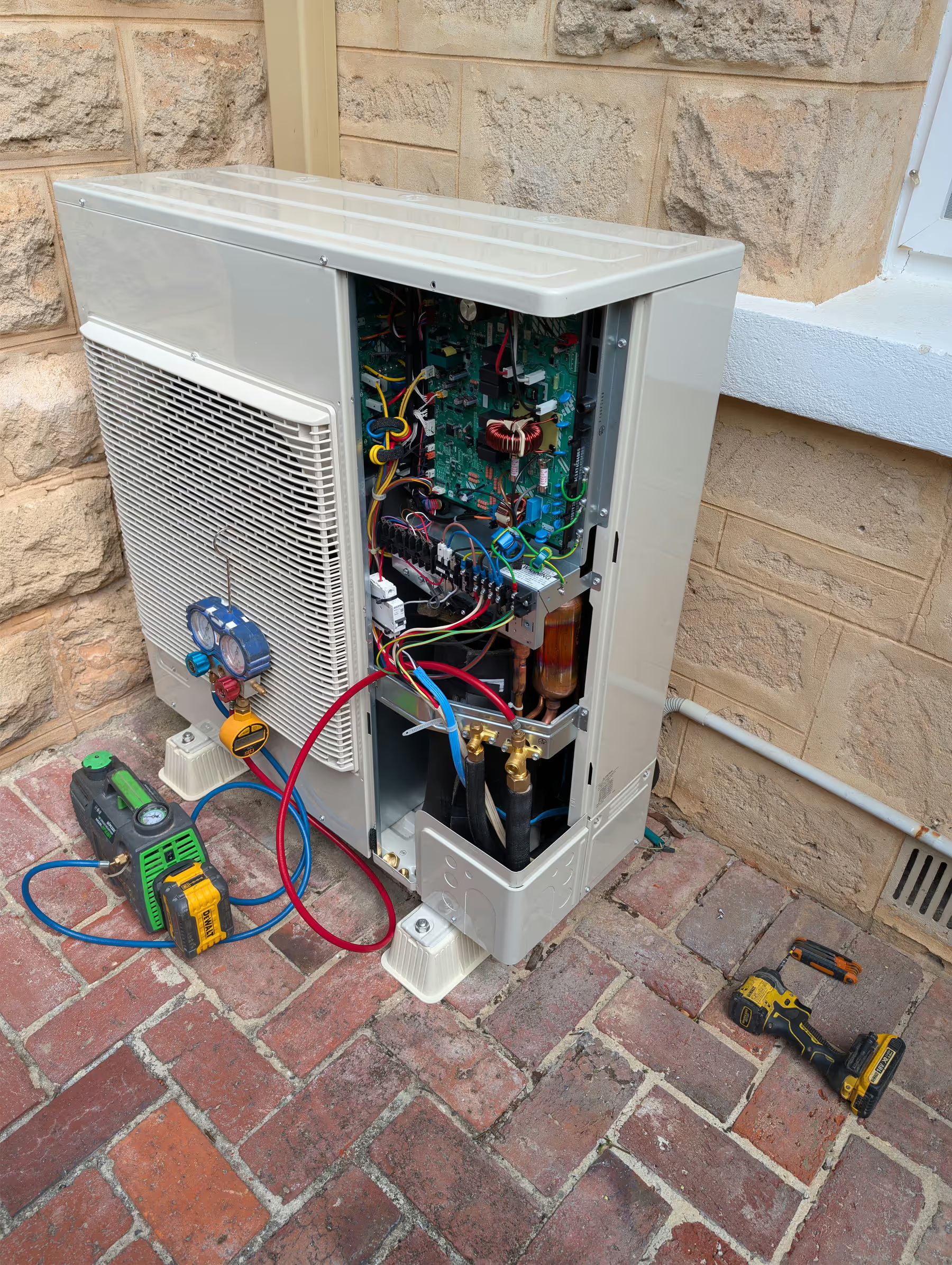
Every spring, as Perth flicks its air conditioners from heating to cooling for the first time in months, the same phone call starts up: “The aircon’s not cold anymore, I think it just needs a regas. How much do you charge?”
The air conditioning regas is one of the most requested services in the trade, and it’s built on a myth worth busting properly: a healthy home air conditioner never needs regassing. Not annually, not every five years, not ever. Here’s what’s actually going on when your split system loses its chill, why the “cheap regas” is the most expensive thing you can buy, and what a proper fix looks like, from a licensed Perth air conditioning and refrigerant-handling technician.
First, a quick fork in the road: if you’re here about your car’s air conditioning, that’s a different machine and a different trade, car systems genuinely do weep small amounts of refrigerant through the compressor’s shaft seal, which is why automotive regassing is a real service. See an automotive air conditioning specialist. Everything below is about home split, multi-head and ducted systems.
Key Takeaways
- A home air conditioner is a sealed circuit, the refrigerant circulates forever and never gets “used up”. If it’s low on gas, the gas went somewhere: you have a leak.
- “Regassing” a leaking system without fixing the leak is renting your cold air. The new refrigerant follows the old refrigerant out, often within months.
- Most “needs a regas” calls turn out to be something cheaper, a choked filter, a filthy outdoor coil, or a settings issue. Genuine refrigerant loss is the minority.
- Refrigerant handling is licensed work in Australia, it legally requires an ARCtick refrigerant handling licence, and you can’t buy refrigerant without one. There is no DIY version of this job.
- The proper fix is find the leak, repair it, then re-charge by weight to the manufacturer’s specification, in that order.
Why your home aircon never “uses up” its gas
A split system’s refrigerant does laps. It’s compressed outside, expands and absorbs heat inside, and comes back around, a closed loop, factory-sealed and pressure-tested, with nothing consumed in the process. The same charge of refrigerant that left the factory should still be doing laps in ten years.
That’s the fundamental difference from your car. An automotive compressor is driven by a belt through a rotating shaft seal, and that seal weeps slightly by design, a car losing a little gas per year is normal wear. Your home system has no such seal. It has brazed and flared connections that should hold forever, which is why “top it up every couple of years” makes sense for a Commodore and no sense at all for the Daikin on your wall.
So when a home system genuinely is low on refrigerant, there’s exactly one explanation: it’s escaping through a leak, most often at a flare joint on the pipework, occasionally through a corroded coil or a damaged line. And that changes the job completely.
Why the cheap “regas” is a rip-off
Someone offers to “just top it up” for a flat fee, no questions asked. Here’s what you’re actually buying:
- A countdown timer. The leak that emptied the system is still there. Your new refrigerant leaves by the same exit, sometimes over a year, sometimes over weeks, and you’re back where you started, minus the fee.
- Possible damage along the way. Running low on refrigerant strains the compressor, the most expensive component in the system. Repeated low-gas running can turn a $300 repair into a $2,000+ replacement conversation.
- An environmental (and legal) problem. Modern refrigerants like R32 and R410A are potent greenhouse gases. Knowingly letting them vent through an unrepaired leak, charge after charge, is exactly what Australia’s refrigerant licensing scheme exists to prevent. A licensed technician who tops up a known leaker without repairing it is doing the wrong thing by the regulations, not just by you.
The honest version of this service isn’t a regas. It’s a leak find and repair, then a re-charge, and any quote that skips the first two steps is a quote for the countdown timer.
”Not cold” usually isn’t the gas at all
Before anyone talks refrigerant, the boring suspects have to be eliminated, because they’re the actual culprit in most of the “needs a regas” calls we attend:
- A choked return-air filter. The most common cause of weak cooling in Perth, full stop. Ten minutes with the vacuum fixes it, here’s how to clean your filters.
- A filthy outdoor unit. A condenser coil packed with dust and garden debris can’t reject heat, and cooling capacity dives. Perth’s dust does this to unserviced units in a couple of summers.
- Settings and mode mix-ups. Dry mode, an economy setting, a low fan speed, or a remote that never left winter’s heating program.
- Sizing and load. A system that’s always struggled on 40°C days isn’t low on gas, it may simply be undersized for the room.
The genuine low-refrigerant tells are more specific: ice forming on the indoor unit or the smaller copper pipe, a hissing or bubbling sound near the unit, cooling that’s faded progressively over months rather than overnight, and the compressor running longer and longer for less and less. (Water dripping inside, by the way, is usually a different problem again, see why your air conditioner leaks water.)
What a proper refrigerant repair looks like
When it really is the gas, the professional sequence matters:
- Confirm the shortfall, measured system pressures and temperatures against the manufacturer’s specification, not a guess from the driveway.
- Find the leak, electronic leak detection, pressurising the system with dry nitrogen, or UV dye tracing. Flare joints at the outdoor unit are the usual offenders; coils and line sets less often.
- Fix it, remake the flare, repair or replace the failed component.
- Evacuate and re-charge by weight. The system is vacuumed to remove air and moisture, then charged with the exact quantity of refrigerant on the nameplate, weighed in, not “topped up till it feels cold”.
That sequence is why there’s no honest flat “regas price” for a home system: the refrigerant charge is the cheap part, and the diagnosis and repair are the actual job. Anyone advertising a one-price regas for split systems has skipped the part that makes the fix permanent.
One more wrinkle worth knowing: if your system is old enough to run R22 refrigerant (typically pre-2010), top-ups are close to uneconomical, R22 imports are banned and remaining stocks are scarce and expensive. A leaking R22 system is usually a replacement conversation, and an honest tech will tell you that before spending your money chasing the leak. If that’s where you land, our Perth split system cost guide covers what a like-for-like replacement runs, and the installed price directory shows live supply-and-install prices by model and size.
Who’s allowed to do this work
In Australia, handling refrigerant, recovering it, charging it, even breaking into the sealed circuit, legally requires an ARCtick refrigerant handling licence, and refrigerant itself can only be purchased by licence holders. This isn’t gatekeeping for its own sake: mishandled refrigerant is a greenhouse problem, a pressure-vessel safety problem, and usually a dead-compressor problem rolled into one.
We hold both the refrigerant handling licence and the electrical licence (AU064616 | EC16559), which means the whole chain, diagnosis, leak repair, re-charge, and any wiring the fault touched, happens in one visit by one accountable team.
FAQ
How often should a home air conditioner be regassed?
Never, if it’s healthy. A sealed system keeps its charge for its whole service life. If it needs gas, it needs a leak repair, the regas without the repair is temporary by definition.
How much does it cost to regas a home air conditioner?
There’s no honest flat answer, because the real job is diagnosis + leak repair + re-charge, and the leak determines the price. Fault finding starts from $165 inc GST, that covers finding out what’s actually wrong, which in most “needs a regas” cases turns out to be a fix cheaper than refrigerant. If it is a leak, you get a fixed quote for the repair before we touch anything.
Can I regas my own air conditioner?
No, and not just as advice. Refrigerant purchase and handling require an ARCtick licence in Australia, so there’s no legal DIY path. The canned “recharge kits” sold online for cars have no place near a home split system.
My aircon blows cold at night but not on hot days, is that low gas?
More often that’s a struggling condenser (dirty coil, poor airflow around the outdoor unit, harsh afternoon sun) or an undersized system hitting its limit. Genuine refrigerant loss usually shows up as consistently weak cooling plus the telltales above, ice on the pipes being the big one.
There’s ice on the copper pipe, should I keep running it?
Switch it off and book a service. Running an iced-up system risks the compressor, and the ice itself melts into water that ends up somewhere you don’t want it. Ice usually means low refrigerant or badly restricted airflow, both fixable, neither self-healing.
Does a new install ever need topping up?
A correctly installed split is vacuumed and charged (or charge-adjusted for long pipe runs) at commissioning and shouldn’t need anything after that. If a recent install is already low, the installer left a leak, that’s a warranty conversation, and the licence framework exists precisely so there’s someone accountable.
The bottom line
Home air conditioners run a sealed refrigerant loop: no top-ups, no schedule, no “regas service”. Weak cooling is usually filters, coils or settings; when it genuinely is the gas, the only fix that lasts is find the leak, repair it, and re-charge by weight, licensed work, quoted properly after diagnosis. The flat-price regas isn’t a bargain; it’s the same fault sold to you twice.
Get the real fault found
We diagnose “not cold” air conditioners across Perth, split, multi-head and ducted, with fault finding from $165 inc GST, ARCtick-licensed refrigerant work, and a fixed quote before any repair. If it’s just a filthy filter, we’ll tell you that too.
Book a service or call 0434 951 341, and if there’s ice on the pipes, turn it off first.
Need a hand with this?
Otter Air is your local, licensed Perth team for air conditioning and electrical. Free quotes, upfront fixed pricing, and honest advice.